Welcome — whether you’re sourcing a reliable everyday carrier for the farmers’ market, stocking up for a client gifting program, or just tired of wrapping bottles in a dish towel and hoping for the best, you’ve landed in the right place.
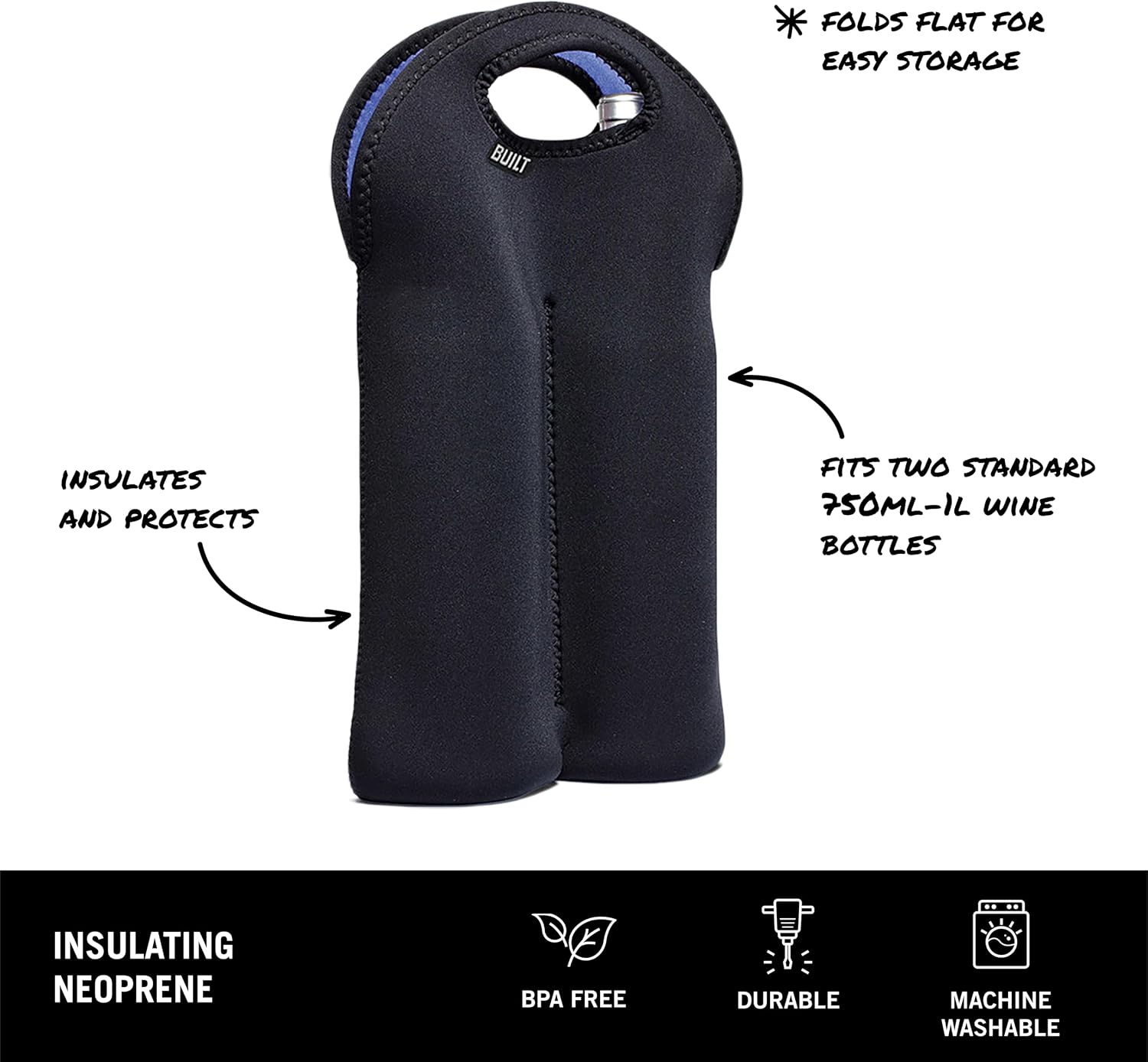
If you’re new to the material: neoprene is the same synthetic rubber used in wetsuits — soft, stretchy, and naturally insulating. In wine tote form, it’s typically cut into a single-bottle sleeve or a multi-bottle bag, stitched at the seams, and sometimes bonded to a nylon or polyester liner. The defining properties are flexibility (it squeezes into an overstuffed tote bag where a rigid carrier won’t), light insulation (not a true cooler, but meaningful over a two-to-three hour window), and easy cleaning — most neoprene bags rinse clean under a tap, and many manufacturers spec them as top-rack dishwasher safe or gentle-cycle machine washable. This guide breaks down where neoprene genuinely earns its price point, where it falls short, and how to match the right format to your actual use case.
What Neoprene Actually Does (and Doesn’t) for Your Wine
Let’s start with the honest tradeoffs, because neoprene is marketed aggressively and it’s easy to walk away with the wrong mental model.
What it delivers well:
Neoprene’s closed-cell foam structure creates a modest thermal buffer. Published spec sheets from manufacturers including Vinglacé and Coravin put passive temperature retention for single-bottle neoprene sleeves at roughly 45 minutes to two hours of meaningful delay against ambient heat — enough for the walk from your car to the picnic table, the drive to a friend’s dinner, or a warm afternoon at an outdoor concert. Owners across aggregated reviews on Wine Enthusiast’s roundup and Real Simple’s buying guide consistently cite this as the format’s primary selling point in warm-weather use.
The washability factor is underrated. Canvas totes absorb condensation and wine drips, then hold them. Leather requires careful spot treatment. Neoprene wipes down with a damp cloth for daily maintenance and tolerates a periodic machine wash (cold water, air dry — the standard manufacturer guidance) without losing shape or insulation integrity. For high-turnover use cases — event gifting sets that get reused, hospitality programs, households that pull the tote out every weekend — this matters in ways that don’t show up in the price comparison.
Where it falls short:
Neoprene is not a substitute for a true vacuum-insulated carrier when temperature stability is the priority. If you’re transporting a Burgundy that’s been cellared to drinking temperature and needs to arrive within a degree or two of where it started, a structured insulated bag with a proper thermal lining is the correct tool. Good Housekeeping’s review roundup notes this distinction clearly: neoprene is a buffer, not a cooler. For long-distance transport of collector-grade bottles, the physics aren’t there.
Structural protection is also limited. Neoprene flexes — which is an asset for packability — but it offers minimal crush resistance compared to padded rigid-frame carriers. A bottle in a neoprene sleeve that gets wedged under a case of groceries is more exposed than the same bottle in a structured tote.
Format Decision: Sleeve vs. Tote vs. Multi-Bottle Bag
This is where most buyers make their first real decision, and it’s worth naming the tradeoffs explicitly.
Single-bottle sleeves ($12–$30 range) are the most portable format. They’re the correct choice when you’re already carrying a bag and just need the bottle protected in transit. Owners report they’re particularly useful for BYO restaurant situations, picnics, and casual gifting — a sleeve dressed up with a ribbon reads as a complete, considered gift without adding bulk. The Spruce Eats’ gear guide highlights single-sleeve neoprene as a consistent pick for “just needs to survive the commute” scenarios.
Two-bottle neoprene totes ($20–$45) add a zippered top and a carrying handle, which converts the sleeve concept into a standalone carrier. This is the sweet spot for casual picnickers and weekend hosts — you’re not committing to a full six-bottle structure, and the flexibility means the bag collapses flat when empty and stores in a drawer. Apartment Therapy’s buying guide reviews several two-bottle neoprene formats and notes that owners particularly value the flat-storage capability in smaller apartments and vehicles.
Six-bottle structured neoprene totes ($35–$75) are where the format starts competing with canvas and lightweight insulated fabric carriers. The construction quality variance in this tier is significant. At the lower end, neoprene panels are bonded to a lightweight frame with minimal stitching reinforcement; at the upper end, brands add reinforced carry handles, interior dividers that prevent bottle-to-bottle contact, and exterior pockets. For gift buyers and corporate purchasers, this is the tier to evaluate carefully — the difference between a $38 six-bottle neoprene tote and a $65 one often comes down to handle construction and whether the bottle dividers are sewn in (better) or removable inserts (more flexible, but less stable in transit).
By the Numbers
| Format | Typical price range | Thermal window (manufacturer spec) | Machine washable? |
|---|---|---|---|
| Single-bottle sleeve | $12–$30 | ~1–2 hours passive | Mostly yes (cold, air dry) |
| Two-bottle tote | $20–$45 | ~1.5–2.5 hours passive | Mostly yes |
| Six-bottle structured tote | $35–$75 | ~2–3 hours passive | Varies — check seams |
Thermal windows above reflect passive insulation against ambient temps in the 75–85°F range, based on published manufacturer data. Actual performance varies with starting bottle temperature and sun exposure.
The Material Details That Separate Good Neoprene Bags from Forgettable Ones
If you’re evaluating a specific product — whether for personal purchase, a gifting program, or event sourcing — these are the construction markers worth checking against published specs and owner reviews.
Seam type matters more than thickness. Neoprene thickness (usually measured in millimeters — 3mm and 5mm are common wine-tote specs) affects insulation, but seam construction affects durability. Flatlock stitched seams, which you’ll see called out on better-quality bags, sit flush and resist peeling. Overlocked seams are faster to produce but can separate with repeated washing. Real Simple’s buying guide flags seam integrity as a common long-term failure point in budget neoprene bags.
Zipper quality is the most predictable failure point. Reviews across multiple roundups — Wine Enthusiast, Good Housekeeping, Apartment Therapy — surface zipper failure as the dominant complaint in neoprene wine bags under $25. YKK-branded zippers are the standard benchmark cited by reviewers; bags that don’t spec their zipper brand are usually running a generic that performs accordingly.
Handle attachment on six-bottle totes. A full six-bottle load at standard 750ml weighs roughly 11–12 pounds, plus the bag itself. On neoprene totes where the handles are stitched only to the neoprene exterior panel, owners in long-run reviews consistently report handle detachment within 8–12 months of regular use. Handles that are bar-tacked or webbing-reinforced through a separate interior panel are the construction detail to look for if the bag is going into regular rotation.
Lining material for washability. Neoprene itself resists odors and moisture absorption, but if the bag has a fabric lining, that lining’s fiber content determines how cleanable the interior actually is. Polyester linings wipe clean and maintain color. Cotton-blend linings absorb spills and can harbor residual odor after a leak. For hospitality or gifting programs where bags get reused, this is worth confirming in the product spec sheet before ordering in volume.
Gift Buyers and Corporate Sourcers: Where Neoprene Fits in the Mix
If you’re sourcing for a gifting occasion — wedding welcome bags, bachelorette kits, client gifts, event activations — neoprene has a legitimate role but a narrow one. Here’s the honest framing.
At the $80–$150 gifting tier that dominates bachelorette and wedding gifting (per the purchase patterns Apartment Therapy and Real Simple both document in their gifting roundups), neoprene usually isn’t the lead material. Leather, waxed canvas, and premium structured totes carry that price point more naturally. But neoprene two-bottle sleeves at $20–$35 work extremely well as a secondary item in a larger gift set — paired with wine tool sets, personalized openers, or a branded tasting notebook. The flexibility and novelty of the material reads as considered rather than budget-conscious at that scale.
For corporate event sourcing in the $60–$120 per-unit range, six-bottle neoprene totes with custom embroidery or printed branding are increasingly common. The washability and packability are genuine practical benefits for recipients who will actually use the bag repeatedly — which is the real measure of a corporate gift’s long-term brand impression. The tradeoff is that neoprene doesn’t photograph or present as luxuriously as structured leather at the same price point, so the decision typically comes down to whether the buyer is optimizing for presentation at gift reveal or for use-rate after the event.
Decision Rules: If X, Then Y
After going through the specs, owner reviews, and format comparisons, here’s a clean framework for the most common decision scenarios:
If you need a reliable everyday carrier for a 1–3 hour window and easy cleanup: A two-bottle neoprene tote in the $22–$40 range is the right tool. Don’t overspend here — the thermal delta between a $22 and a $55 two-bottle neoprene bag is marginal. Spend the savings elsewhere on the bottle.
If you’re assembling a gifting kit under $50 per unit: A neoprene single-bottle sleeve at $15–$25, combined with one meaningful wine accessory, is a sharper presentation than a mediocre structured tote at the same budget.
If you’re transporting collector-grade wine that needs temperature integrity: Neoprene is not the right material. Move up to a vacuum-insulated or hard-sided carrier. The cost difference is worth it for what’s inside.
If you’re sourcing in volume for corporate gifting and want something recipients will actually keep: Six-bottle neoprene totes with reinforced handles and YKK zippers in the $45–$70 range hit a strong value-to-utility ratio. Confirm the lining material and seam construction before committing to a production run, and ask specifically whether custom embroidery is applied before or after the bag is assembled (before is better — post-assembly embroidery on stretchy neoprene frequently puckers).
If the bag needs to store flat: Neoprene wins against every other insulated format here. It’s the right choice for travel scenarios, tight kitchens, and anyone packing for a destination event.
The bottom line from aggregated owner feedback and published spec comparisons: neoprene earns its place when flexibility, washability, and casual thermal buffering are the priorities. Know what you’re buying it to solve, and it’s hard to beat at the price.