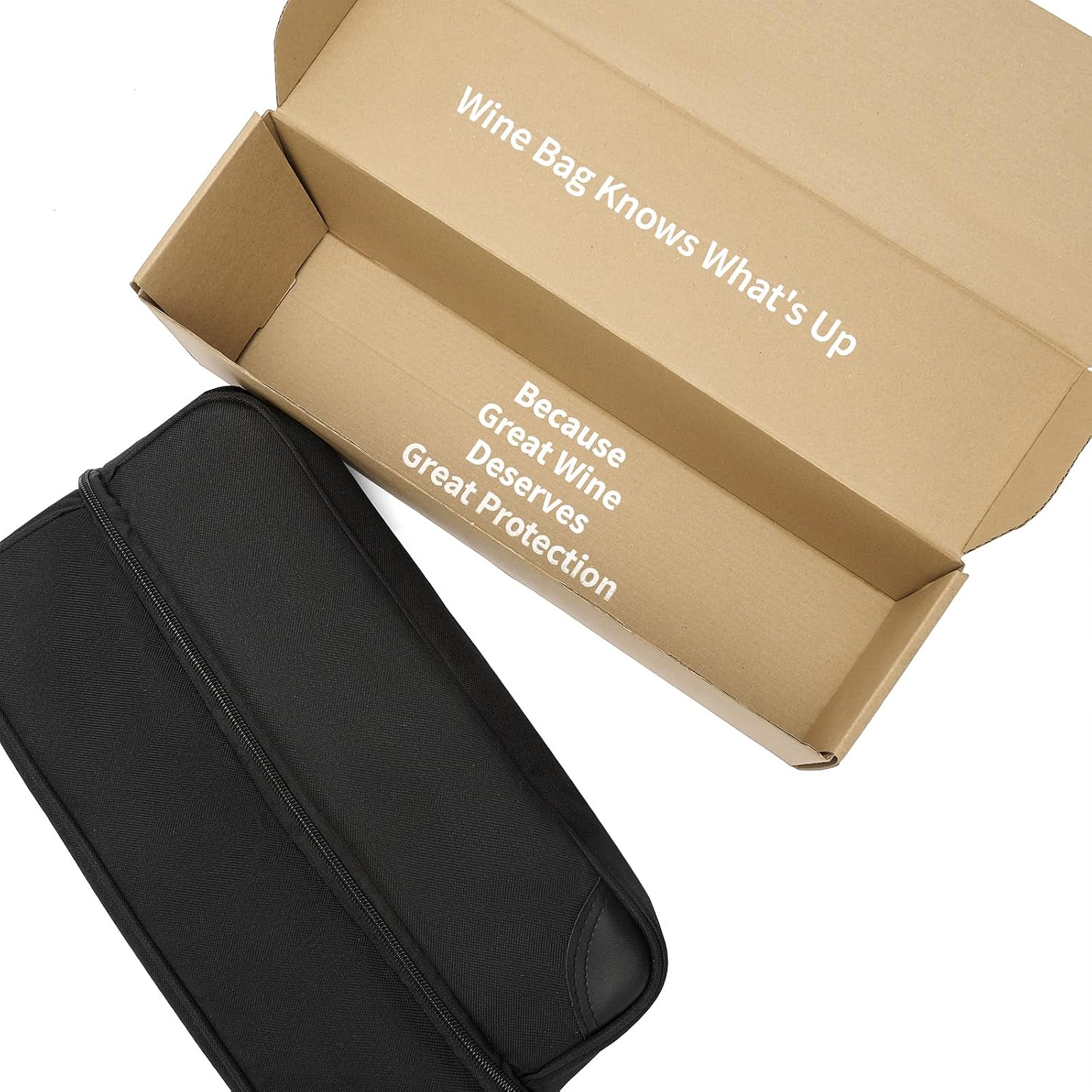
Welcome — and if you’re here, you’re probably staring at a gift-set listing that bundles a wine tote bag (a fabric or leather carrier designed to transport wine bottles safely) with a collection of accessories: vacuum-sealed tumblers, foil cutters, corkscrews, stoppers, and sometimes even aerators. These sets look like a great deal on paper. You get the bag and the tools, all wrapped in a tidy package. But “looks like a deal” and “actually is a deal” are two different things, and the gap between them is where most buyers quietly lose $30 to $60. This guide breaks down which accessory bundles genuinely earn their price, which components are almost always underspec’d filler, and — critically — how to match the right set to the specific occasion, recipient, and budget you’re working with right now.
The Honest Anatomy of a Wine Tote Gift Set
Before you can evaluate price-to-value, you need to understand how these bundles are priced in the first place. A gift set isn’t priced as the sum of its parts. It’s priced against the perceived value of the occasion — which is why the same $22 waiter’s corkscrew (a compact, lever-style bottle opener standard in the restaurant industry) that sells individually at that price gets bundled into a $90 tote set alongside a canvas bag that retails for $28 on its own. The math on paper is $50. The set retails for $90. That $40 spread is what gift-set manufacturers call “occasion premium,” and it’s not inherently wrong — but you should see it clearly.
There are three distinct tiers of gift-set bundle logic floating around the market in 2026:
Value bundles ($25–$55): Canvas or polyester totes, usually two-bottle capacity, paired with a basic corkscrew and a single stopper. These are impulse gifts and picnic-occasion sets. The tote is functional but uninsulated. The accessories are entry-level. Real Simple’s roundup of wine gifts at various budgets consistently places these in the “thoughtful but modest” category — appropriate for coworker gifts or casual outdoor occasions where nobody is transporting anything precious.
Mid-tier sets ($60–$120): Six-bottle totes with structured dividers (internal separators that keep bottles from knocking together — critical for transport), insulated lining, and a curated accessory kit that typically includes a lever corkscrew or electric opener, two to four tumblers, a foil cutter, and a stopper. This is the tier where value diverges most sharply depending on the brand. It’s also where most gift buyers in the wedding, bachelorette, and corporate gifting spaces are spending, per Brides’ 2025 review of bachelorette party wine gifts.
Premium sets ($130–$200+): Structured leather or waxed-canvas carriers, often two- or three-bottle configurations, paired with professional-grade accessories — weighted stainless tumblers, a Coravin-style preservation system, or a sommelier-quality lever pull. These are collector and oenophile sets. The tote itself does serious thermal work (maintaining bottle temperature during transport), and the accessories are meant to be used repeatedly, not displayed once and forgotten.
By the Numbers
| Bundle Tier | Typical Retail | Tote Retail (Separate) | Accessories Retail (Separate) | Implied Occasion Premium |
|---|---|---|---|---|
| Value ($25–$55) | ~$40 | ~$18 | ~$14 | ~$8 |
| Mid-tier ($60–$120) | ~$90 | ~$45 | ~$30 | ~$15 |
| Premium ($130–$200+) | ~$165 | ~$95 | ~$55 | ~$15 |
What this table shows: the premium tier’s occasion markup is proportionally smaller than the mid-tier. That’s because premium sets are built from components that actually carry their individual retail weight — the tote is a real product, the accessories are real products. Mid-tier is where the inflation concentrates.
Which Accessories Actually Hold Their Value (and Which Are Usually Filler)
This is the operative question for anyone with a purchase decision in front of them. Here’s the honest breakdown based on aggregated owner reviews and published editorial assessments from Good Housekeeping, Wine Enthusiast, and The Spruce Eats.
Worth the bundle price
Double-wall stainless tumblers (12–16 oz): When the tumblers in a gift set are genuine double-wall vacuum-insulated stainless — not single-wall stainless, not plastic with a metallic coating — they represent real standalone value. Good Housekeeping’s accessories review notes that quality vacuum-insulated tumblers retail individually between $18–$35. If a $90 set includes two solid tumblers and a decent tote, the math often pencils out. How to check: the product listing should specify “double-wall vacuum insulation” and a weight that feels substantial (usually 8–12 oz per tumbler). Lightweight tumblers that feel hollow when you pick them up are almost always single-wall.
Lever-style (waiter’s) corkscrews from named brands: The Spruce Eats’ best wine openers guide consistently ranks lever-style corkscrews — specifically the hinged, two-step lever design used by sommeliers — as the best functional choice for everyday use. When a gift set includes a branded lever pull (look for Pulltap’s, Laguiole-style, or Coutale Sommelier references in the listing), it’s adding $20–$35 of genuine individual value. Generic corkscrews with wobbly foil cutters and a single hinge point are the tell for filler.
Electric openers with USB-C charging: In the mid-to-premium tier, electric openers have become a genuinely valued inclusion. They retail individually at $25–$55. If the bundle spec includes one with a stated charge cycle (usually 30–60 bottles per charge), that’s a real asset. If the listing vaguely says “automatic opener” without charge specs, assume budget quality.
Usually filler — buyer beware
Foil cutters: Almost universally underpowered in gift sets. They retail for $4–$8 individually and add zero prestige. Their inclusion in a premium bundle is a sign the manufacturer is padding SKU count rather than adding value. It’s not harmful — it’s just not a reason to pay more.
Single stoppers: A rubber or plastic wine stopper has a retail value of $3–$8. Sets that tout “includes a wine stopper!” as a feature point are padding. The exception: vacuum stoppers (which actively remove air from the bottle to slow oxidation) do add legitimate value and retail at $15–$25. Check whether the listing specifies “vacuum seal” or just says “stopper.”
Plastic tumblers with metallic finish: This is the most common sleight of hand in the $40–$70 bundle range. Listings show photos of what appear to be stainless tumblers. The weight and feel in hand reveal single-wall plastic with a chrome or rose-gold coating. Owners on aggregated review platforms consistently flag this as the biggest source of gift-set disappointment. If the listing doesn’t specify stainless steel and double-wall construction, assume plastic.
Aerators: Nice to have, genuinely useful for bold reds, but aerators included in gift sets rarely exceed $8–$12 in standalone quality. A real aerator (the kind with a spout insert and a mesh diffuser) retails at $15–$40. Bundle aerators are usually simple pour-through discs.
Matching the Set to the Occasion: A Decision Framework
Real Simple’s gift guide framework and Wine Enthusiast’s gift-set roundup both converge on the same logic: the right set is defined by recipient use case first, aesthetic second, accessories third. Here’s how to apply that to a live decision.
If the recipient is a casual entertainer or picnicker ($25–$55 range): Prioritize the tote itself. Look for a two-bottle canvas carrier with a reinforced base and padded dividers. The accessories at this tier are incidental. A clean, well-made tote with a basic corkscrew and one stopper is a better gift than a flimsy tote with an impressive-sounding accessory list.
If this is a wedding, bachelorette, or milestone birthday gift ($75–$130 range): This is where personalization pays more dividends than accessories. Boutique brands like Twine & Todd and Uncommon Goods offer monogrammed or embroidered six-bottle carriers that read as intentional and premium. At this tier, you want the tote to be the hero — choose a set where at least two of the included accessories are genuine (double-wall tumblers or a quality lever pull), and budget $15–$25 of your spend toward personalization if the brand offers it.
If this is a corporate gifting or volume purchase ($60–$180 per unit): The operative concern shifts from accessories to brand presentation and repeatability. Corporate event planners sourcing custom-embroidered sets need consistent product specs across units — accessory quality variance is a real risk at volume. Wine Enthusiast’s editorial coverage of corporate wine gifts recommends specifying tote construction material (structured vs. soft-sided), insulation type, and accessory count per unit in any volume order spec sheet. Accessories in corporate sets should be simple and durable — a single quality tumbler and a waiter’s corkscrew outperform a large kit with inconsistent quality.
If the recipient is a serious collector or oenophile ($150–$200+): At this tier, the tote’s thermal performance is non-negotiable. Look for insulated leather or waxed canvas carriers with thick foam lining (manufacturer specs usually cite ½-inch or greater foam thickness) and reinforced bottle necks. Accessories matter less than protection and presentation. A two-bottle structured leather carrier with a single quality tumbler and a professional corkscrew is more appropriate than a six-bottle canvas tote with a full accessory suite. Brides’ 2025 editorial on wine gifts for the couple who has everything specifically notes that oenophiles tend to already own quality openers and stoppers — a remarkable tote with minimal accessories signals sophistication.
The Decision Rule
Here’s the clear if/then framework for anyone with a purchase decision pending:
If the set’s accessories include double-wall stainless tumblers AND a named-brand lever corkscrew → the accessories are likely pulling their weight. Evaluate the tote independently on construction, and if it passes, the bundle is genuinely additive.
If the accessories list reads “corkscrew, stopper, foil cutter, and tumblers” with no material specs → assume the accessories retail collectively at $15–$20 and price the tote accordingly. Pay for the tote, not the bundle.
If the primary use case is personalization for a gift → spend on the tote and embroidery, and let the accessories be modest. A beautifully monogrammed carrier with a basic but clean accessory kit outperforms an unbranded set with impressive specs every time.
If you’re buying at volume for corporate gifting → simplify the accessory kit deliberately. One tumbler, one opener, consistent packaging. Complexity at volume creates variance, and variance creates complaints.
The gift-set category is genuinely better than it was five years ago. Brands have responded to owner feedback — the days when every bundle included a plastic “stainless” tumbler are giving way to more honest spec disclosures and real double-wall construction at the mid-tier. But the gap between great value and expensive filler still runs wide enough to matter. Know what you’re actually buying, and you’ll spend right every time.