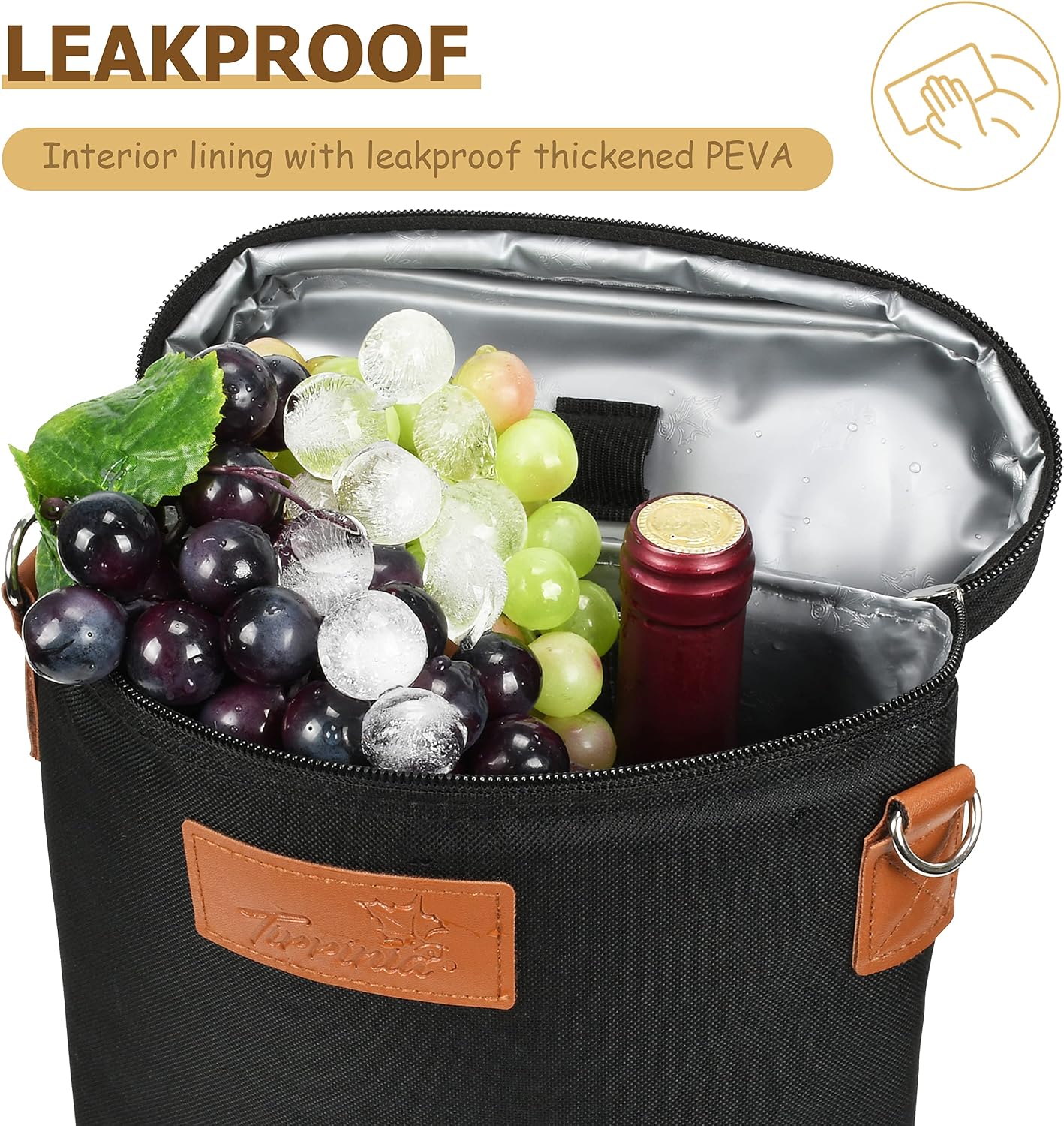
If you’ve ever shown up to a BYOB dinner with a bottle tucked under each arm — or tried to wedge two Burgundy-shaped bottles into a grocery bag on a warm afternoon — you already understand why a dedicated two-bottle wine tote exists. A wine tote bag is exactly what it sounds like: a carrying case designed specifically to hold, protect, and transport wine bottles upright. The two-bottle format (meaning it holds two standard 750ml bottles side by side or in tandem) has become the sweet spot for casual entertaining, BYOB restaurant nights, weekend travel, and picnic setups where one bottle feels stingy and six feels like a commitment. This guide breaks down the formats that real owners gravitate toward, the tradeoffs between them, and a clear decision rule so you can stop second-guessing and just pick the one that fits your actual life.
| EDITOR'S PICK[Wine Tote Carrier Bag | 2 Bottl…](https://www.amazon.com/dp/B0BZJPPKKN?tag=greenflower20-20) | Mid-tier[Tirrinia 2 Bottle Leakproof Ins…](https://www.amazon.com/dp/B077LTK8VS?tag=greenflower20-20) | Budget pick[BUILT 2B-BLK 2-Bottle Stain Res…](https://www.amazon.com/dp/B00015COUS?tag=greenflower20-20) | |
|---|---|---|---|
| Material | Vegan Leather | — | Neoprene |
| Insulated | ✗ | ✓ | — |
| Leakproof | — | ✓ | — |
| Price | $69.99 | $20.99 | $18.99 |
| See on Amazon → | See on Amazon → | See on Amazon → |
Why the Two-Bottle Format Earns Its Own Category
It’s easy to assume any wine bag is interchangeable with any other. They’re not — and once you’ve lived with a few, the differences in format matter more than the price tag.
The two-bottle tote occupies a specific carrying niche. It’s large enough to handle a full dinner contribution (one white, one red — or a spare if you’re being optimistic) but compact enough to fit in an overhead bin, a backpack pocket, or the back seat of a rideshare without drama. Per Wine Enthusiast’s tote and carrier buying guide, two-bottle formats consistently outsell single and three-bottle options for the BYOB and casual gifting segments — buyers want enough capacity to feel generous without the bulk of a full carrier.
But within “two-bottle tote,” there are at least four meaningfully different formats circulating in the 2026 market, and they don’t all solve the same problems. Choosing the wrong one is frustrating. Here’s how to read the differences.
The Four Formats — and What Each One Actually Trades Off
1. Soft insulated canvas with dividers — This is the category workhorse. Think of a small cooler bag shaped to hold two bottles upright, usually with a fabric or foam divider between them and a zippered top closure. Brands like Wine Enthusiast and Crate & Barrel anchor the $12–$35 price band here.
What owners report: These are the bags reviewers at Real Simple and The Spruce Eats consistently describe as genuinely useful for 90% of use cases — outdoor events, grocery runs, BYOB nights. Insulation keeps a chilled white at serving temperature for 2–4 hours in moderate conditions (per manufacturer ratings across the category; independent validation varies). The tradeoff is construction longevity: at the lower end of the price band, reviewers at Good Housekeeping note that zippers and handles tend to wear before the bag’s main body does. At the $28–$35 range, construction improves meaningfully.
2. Structured neoprene sleeves (single-bottle, paired) — Instead of a shared bag, this format uses two individual neoprene (wetsuit-style material) sleeves that clip or velcro together. Each bottle gets its own cocoon.
What owners report: Owners who prioritize temperature retention and protection for specific bottles tend to prefer this. The snug fit creates better insulation contact than a loose canvas bag. Apartment Therapy’s wine carrier roundup notes that neoprene sleeve pairs are especially popular with travelers who need to separate a fragile bottle in checked luggage. The tradeoff: they’re bulkier when empty (neoprene doesn’t compress well), and pairing two sleeves together is less elegant than a unified bag.
3. Waxed canvas or leather-trimmed structured totes — This is where aesthetics enter the equation seriously. Brands like Picnic Time’s Heritage Collection and boutique vendors on platforms like Uncommon Goods offer two-bottle totes in waxed canvas, leather, or canvas-leather hybrid construction in the $55–$120 range.
What owners report: These are the totes that photograph well and age visibly — the waxed canvas develops patina, the leather handles soften. Reviewers across gifting roundups on Apartment Therapy and Good Housekeeping regularly highlight Heritage Collection pieces as the format that “doesn’t look like a wine bag” — it reads as a carry-all. The tradeoff is insulation. Most structured totes in this aesthetic category either omit active insulation or include a thin foil liner. For temperature-sensitive transport over more than 30–45 minutes, the soft insulated canvas format wins on function. For an BYOB dinner a few blocks away or a gift that needs to look considered, the structured tote is the right call.
4. Roll-top or backpack-integrated carriers — A smaller format niche, but increasingly well-represented: two-bottle capacity built into a convertible roll-top tote or a daypack insert. Wine Enthusiast’s catalog includes a few options; outdoor-lifestyle brands have expanded into this space in 2025–2026.
What owners report: These appeal strongly to cyclists, hikers, and picnic regulars who already carry a bag and want wine integrated rather than a second carry item. Owners who use them for farmers markets and park picnics tend to rate them highly for convenience. The tradeoff: fit is finicky — Bordeaux-shaped bottles sit differently than Burgundy-shaped ones, and some backpack-integrated carriers don’t accommodate Champagne bottle dimensions.
By the Numbers
| Format | Typical Price Range | Insulation | Best Use Case |
|---|---|---|---|
| Soft insulated canvas | $12–$35 | Good (2–4 hrs rated) | BYOB, grocery, casual picnic |
| Neoprene sleeve pair | $18–$45 | Best contact insulation | Travel, checked luggage, temp-sensitive |
| Structured waxed canvas/leather | $55–$120 | Minimal | Gifting, short-haul transport, aesthetics |
| Roll-top / backpack integrated | $30–$65 | Variable | Picnic, outdoor, cycling |
The Variables That Actually Determine the Right Pick
You’ve got four formats. Here’s how to run the decision against your actual use case.
Insulation requirements vs. trip duration. If you’re carrying wine more than 45 minutes or in warm weather (above 75°F / 24°C), the soft insulated canvas or neoprene option is non-negotiable. The Spruce Eats’ wine tote review specifically calls out the temperature gap between insulated fabric options and structured leather carriers — in warm outdoor conditions, an unlined carrier offers almost no temperature protection after the first 30 minutes. For short urban trips (restaurant, friend’s apartment, nearby picnic), a structured tote is perfectly fine.
Bottle shape compatibility. This one bites more buyers than expected. Standard Bordeaux bottles (tall, straight-sided) fit in almost every two-bottle format. Burgundy and Pinot Noir bottles (wider-shouldered) don’t fit snugly in every divider system. Champagne bottles (the heaviest and widest at the base) are the most problematic — they fit only in totes that explicitly list Champagne compatibility or have generous divider widths. Before purchasing a structured or neoprene format, check the listed interior dimensions. Good Housekeeping’s tote roundup flags this as the most common source of post-purchase frustration in owner reviews.
Frequency vs. occasion. This is a usage-frequency tradeoff that directly affects how much construction quality matters. If you’re reaching for this bag every weekend — farmers markets, BYOB Fridays, casual picnics — pay up within the insulated canvas segment ($28–$35 range) for reinforced handles and a quality zipper. Cheaper hardware fails faster under weekly use. If this is a gifting purchase or an occasional-use carrier, aesthetic quality matters more than handle durability, and the structured waxed canvas tiers make more sense.
Travel vs. local use. For checked or carry-on air travel, the neoprene sleeve pair wins on protection. Wine Enthusiast’s carrier guide notes that the snug bottle-to-material contact in neoprene construction provides meaningful impact cushioning that canvas formats don’t replicate. Roll-top backpack integrations are second for travel, particularly for road trips. Canvas totes, while functional locally, are the most vulnerable to in-transit compression and jostling.
What Reviewers Consistently Get Wrong About This Category
The most common mistake in owner reviews is treating price as a proxy for all quality dimensions simultaneously. A $90 waxed canvas tote from a boutique brand is genuinely better than a $15 canvas tote on aesthetics, materials feel, and gift presentation — but it is not better at keeping wine cold. These are different product lines solving different problems.
Real Simple’s buying guide for wine bags makes this point plainly: insulation performance and visual quality don’t scale together in this category. You’re often choosing which quality dimension matters more for your specific need, not selecting a single “best” product.
The second mistake: underestimating bottle neck height. Two-bottle totes that look generously sized often have insufficient vertical clearance for bottles with tall corks or wax-dipped closures. If you’re carrying anything with a particularly long neck (some Rieslings, certain Champagne formats), verify interior height before purchasing.
The Decision Rule
If you want a clear framework rather than an open-ended shopping exercise:
- If you’re carrying wine outdoors or more than 30 minutes in warm conditions → insulated soft canvas ($25–$35) or neoprene sleeve pair ($25–$45). Function over form. The temperature math doesn’t lie.
- If this is a gift, a dinner party contribution carried a short distance, or something you want to look intentional → structured waxed canvas or leather-trimmed ($55–$120). Aesthetics are the product; brief transport is fine.
- If you need hands-free carrying or are integrating wine into a larger outdoor excursion → roll-top or backpack-integrated ($30–$65). Confirm Burgundy/Champagne clearance before purchasing.
- If you’re traveling by air and the bottle matters → neoprene sleeve pairs, prioritized over every other format. The contact insulation and cushioning are better than anything else in this size class.
Two-bottle totes are a small purchase with a real quality-of-life return if you match the format to the actual use case. The readers who end up most satisfied, based on the pattern across aggregated reviews at Good Housekeeping, Real Simple, and The Spruce Eats, are the ones who resisted choosing on price alone and made the format call first. That’s the move — format first, then budget, then brand.