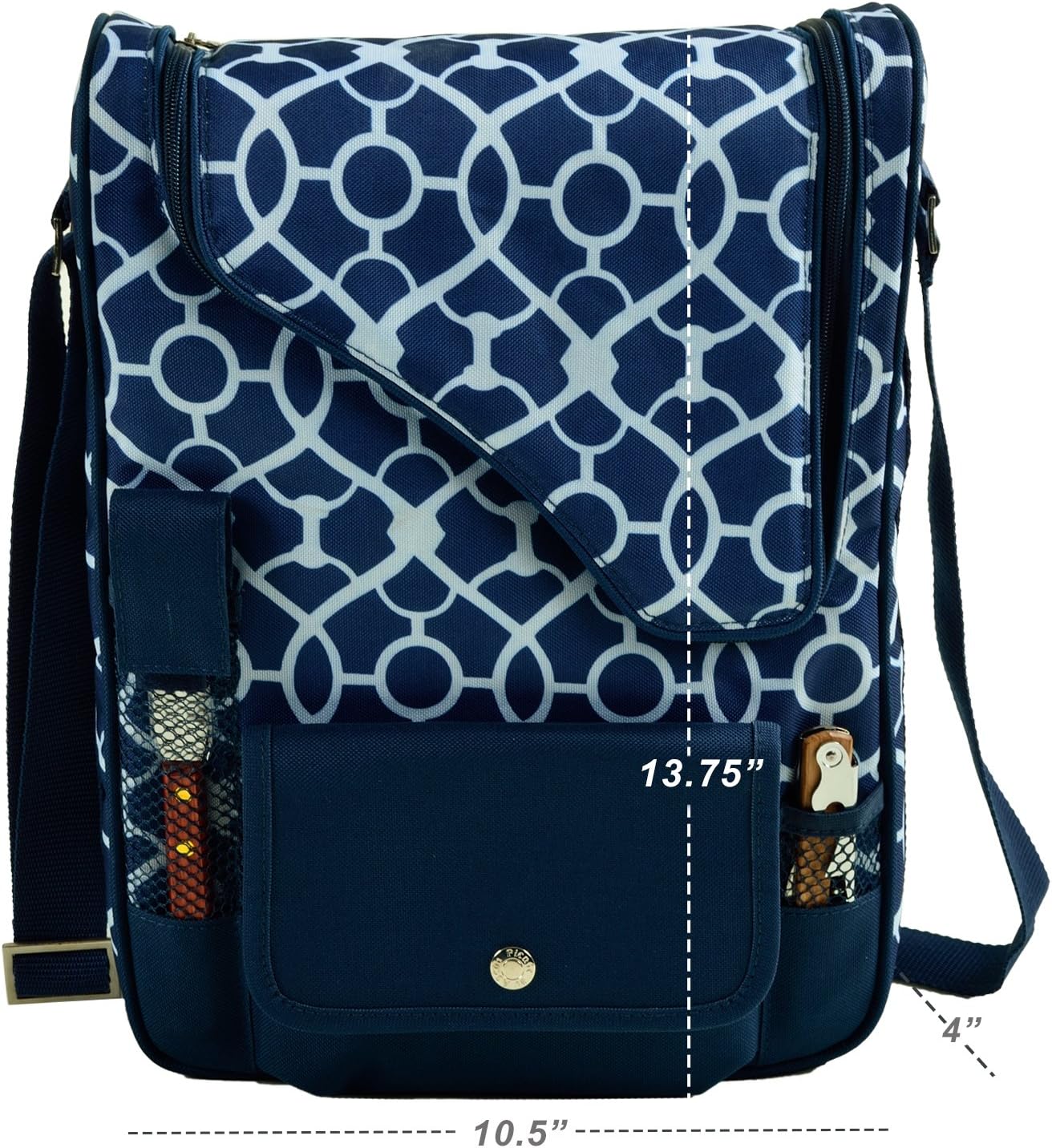
Welcome. If you’re here, you’re probably planning something worth looking forward to — a blanket spread on a hillside, a winery lawn, a friend’s backyard gathering — and you want the gear to match the occasion. A wine tote picnic set is exactly what it sounds like: a carrier bag (usually insulated, usually structured) that comes bundled with some combination of a portable cheese or charcuterie board, stemware or stemless glasses, and often cutlery or napkins, all packaged so you can grab one bag and walk out the door with a complete entertaining setup. The appeal is obvious. The tradeoffs, though, are where most buyers get stuck — because these bundles range from $35 canvas grab-bags to $180 leather-and-acacia-wood ensembles, and the difference in what you’re actually getting isn’t always obvious from a product listing.
This guide is for people who’ve already bought a basic tote and are now thinking bigger — or who are sourcing a gift or a corporate activation and need to make a smart call between competing options at similar price points. We’ll break down the key decision variables, show you where the value actually lives at each tier, and give you a clear “if X, then Y” rule at the end so you can close the loop on whatever decision is currently pending.
What Separates a Good Set from a Bundled Afterthought
The honest problem with most all-in-one picnic sets is that manufacturers optimize for the photo. The basket looks gorgeous; the slate board is attractive; the glasses are included. But when owners actually use these sets, a few friction points emerge consistently — and they tend to cluster around the same three variables.
1. Glass security. This is the make-or-break feature that separates real sets from novelty items. Owners across aggregated reviews at Good Housekeeping’s 2025 picnic basket roundup and Real Simple’s summer entertaining guide consistently flag glass breakage and rattling as the number-one complaint in sub-$50 sets. Proper glass holders are either molded foam inserts, individual fabric sleeves with drawstring closures, or rigid divider systems — anything else is decorative, not functional. If the listing doesn’t specify how glasses are secured, assume they’re not.
2. Board material and portability. Acacia wood boards look premium and photograph well, but owners report two real-world issues: they’re heavy, and they’re not dishwasher safe without risking warping. Bamboo boards, by contrast, are lighter and more moisture-resistant — the Spruce Eats’ 2024 wine tote review notes bamboo as the practical choice for repeated outdoor use. Slate boards are aesthetically distinctive and come with chalk for labeling cheeses, but they add meaningful weight and chip if packed carelessly. The tradeoff: slate for a special occasion, bamboo for regular use.
3. Insulation quality and bottle count. A “two-bottle” tote and a “four-bottle” tote are not interchangeable based on your occasion. More critically, not all insulation is equal. PEVA-lined interiors (a food-safe plastic film) are standard at the $35–$70 range and will hold temperature adequately for 2–3 hours in moderate weather. Foil-backed insulation with a sealed zipper, found in mid-to-premium sets, extends that window meaningfully. For a 45-minute drive to a park, the difference is largely academic. For a full afternoon in summer sun, it matters.
By the Numbers: What Each Tier Actually Buys You
| Price Range | What’s Typically Included | Glass Security | Board Material | Insulation |
|---|---|---|---|---|
| $30–$55 | 2 bottles, 2 glasses, small board | Fabric sleeves or loose | Bamboo or MDF | PEVA liner |
| $55–$100 | 2–4 bottles, 4 glasses, board, cutlery | Molded foam or sleeves | Acacia or bamboo | Foil-backed PEVA |
| $100–$180+ | 4–6 bottles, 4–6 glasses, board, full service | Rigid dividers or cases | Acacia, slate, or marble | Thick foil + sealed zipper |
Wine Enthusiast’s 2025 accessories coverage reinforces that the $75–$110 window is where the feature-to-price curve is steepest — sets in this range routinely include proper glass dividers, acacia boards, and stainless cutlery that owners rate as “actually useful,” versus the decorative cutlery that characterizes many budget sets.
The Three Tiers, Named and Compared
Budget Tier: $30–$55 — Canvas Totes with Basic Bundling
At this price point, you’re essentially buying a functional two-bottle insulated tote with accessories attached. Brands like Wine Enthusiast, Crate & Barrel’s casual line, and various private-label options populate this tier. Owners consistently describe the glasses in these sets as thin-walled and “fine for one season” — not heirlooms. The boards are functional but often MDF laminate rather than solid wood.
The honest use case here: casual weeknight picnics, beach days where breakage risk is real anyway, or a gift for someone who entertains occasionally and wants a starter setup without overthinking it. Real Simple’s 2025 roundup of summer picnic gear notes that canvas totes at this price point often outperform their price on pure insulation — the carriers themselves are usually solid even when the bundled accessories are middling.
Tradeoff to name explicitly: If you’re buying this as a gift for someone with genuine aesthetic standards — a serious wine person, a couple for a wedding gift — the budget tier will underwhelm. The gap between “looks nice in a photo” and “feels right when you unpack it” is widest here.
If you need a recommendation in this tier: Look for sets where the glass sleeves are individual fabric drawstring pouches rather than a shared loose compartment. That single feature, owners note, is the difference between glasses that survive a car ride and glasses that don’t.
Mid-Range Tier: $55–$100 — Where the Real Value Lives
This is the tier that closes most decisions for the intermediate buyer. Apartment Therapy’s 2025 outdoor entertaining roundup specifically highlights that mid-range picnic wine sets have improved markedly in 2024–2025, with brands now competing on glass security features rather than just aesthetics. You’ll find names like Picnic Time (their non-Heritage casual sets), True (formerly True Fabrications), and a handful of Uncommon Goods brands operating here.
What owners report at this level: glasses are noticeably sturdier (often actual borosilicate or thicker-walled glass, not plastic-wrapped flimsies), boards are solid acacia or bamboo with proper feet so they sit flat, and the cutlery is stainless rather than chrome-plated. The tote bags themselves typically have structured bottoms — meaning they stand upright independently — which matters more than it sounds when you’re pouring on uneven ground.
The key tradeoff at this tier is breadth versus depth. A $75 set that serves two people exceptionally well (proper glasses, beautiful board, real insulation) will outperform a $90 set that claims to serve four with compromised components. Reviewers at Wine Enthusiast consistently advise buying for your actual party size and prioritizing component quality over headcount claims on the label.
Four-bottle sets in this range start to appear, and they’re worth the price jump if you’re regularly entertaining more than two. But verify that the four-bottle tote actually has insulation reaching all four bottle slots — some budget-disguised mid-range sets only insulate the inner two.
Premium Tier: $100–$180+ — Structured, Gifted, and Built to Last
At the premium end, the conversation shifts from “functional” to “experience.” These sets — Picnic Time’s Heritage Collection, Twine & Todd’s personalized carriers, and structured leather-adjacent options — are designed to be memorable. The unboxing matters. The materials signal quality before anything is poured. Owners in this tier typically report that they’ve owned the set for 3–5+ years, which changes the cost-per-use math considerably: a $150 set used 20 times over three seasons costs $7.50 per outing in amortized gear cost.
Good Housekeeping’s 2025 picnic basket review specifically cites premium structured sets as the choice for “people who entertain regularly and want gear that doesn’t embarrass them” — which is a blunter endorsement than it sounds.
The board situation at this tier: You’ll encounter acacia with integrated handles, slate with chalk sets, and occasionally marble. Slate is genuinely beautiful and labels cleanly for cheese service, but owners note the added weight is noticeable in a fully packed tote. If the set will be used at fixed locations (a winery, a backyard), slate is worth it. If you’re hiking even 10 minutes to your spot, bamboo or acacia wins.
For corporate and gifting buyers: This is where monogramming and embroidery enter the picture. Brands like Twine & Todd and personalization-focused Uncommon Goods vendors offer custom embroidery on the tote exterior, turning a premium set into a branded gift that recipients actually keep. Per Apartment Therapy’s 2025 coverage, corporate gifting budgets for these sets have normalized in the $80–$150 range per unit — consistent with what event planners report when sourcing client gifts.
The Decision Rule: If X, Then Y
You don’t need to overthink this once you’ve named your variables. Here’s the straight logic:
-
If this is a gift for a wine-serious person or a wedding/bachelorette occasion: Start at $75 and go higher if the budget allows. Prioritize glass security features and board material. Personalization options at this tier turn a purchase into a keepsake.
-
If this is for your own regular use — park picnics, winery visits, summer weekends: The $55–$85 range covers you completely. Pick for your actual party size, not the maximum the set claims.
-
If you’re sourcing multiples for a corporate event or client gift activation: Budget $80–$130 per unit for sets that include embroidery or branding options. Sets below this range tend to show their cost in the accessories, which undercuts the premium impression you’re paying to create.
-
If you’re buying a first set to see if you even use it: The $35–$50 canvas tier is the right call. The downside of getting it wrong is $40, not $150.
The Spruce Eats’ 2024 wine accessories overview puts it well: the biggest mistake buyers make is optimizing for the board or the bag in isolation when what actually determines whether you use the set is the whole experience — how easily it packs, how the glasses survive the car ride, how the setup looks when you open it on the blanket. Evaluate the system, not the individual components.
Pack something worth carrying. The rest follows.